Saturday, February 7, 2009

Going Fetal


My mom has a serious love for this economic crisis. As she sees it, her kids have spent like sailors instead of living like the virtuous sodbusters she knew in her own youth. And she’s ready, so ready, for “the good Lord” (in whom, it must be noted, she does not really believe) to show her kids and the rest of their wastrel generation that Paybacks are Hell. No more lattes. No more organic beef. It’s time to load up the wagon with Grandma in the back. If we git hungry, by golly we can eat one of the dogs. And maybe soap’ll go back to being a nickel a bar.

So at least there’s one American out there who is having a ball.

My blithe heart, on the other hand, has pretty much collapsed under the weight of Cancer Anger. The anger appeared suddenly when my oncologist cleared up a little misunderstanding. When, a few weeks ago, she said that chemo was a definite, should I be positive for a particular marker, she didn’t mean to imply that there would definitely be no chemo if the reverse were the case. When I got the negative report, I clicked my heels in the air and got back to the business of life. The only niggling worry was the way my oncologist sounded when she left the message about the HER-2 report on the phone. She didn’t sound happy.

By the time I walked into her office, I was half expecting her to say what she did say. “Your case is still under review”.

A few days later, I met with my radiation oncologist. I knew he’d be the one to tell me what the docs at the tumor board had decided. I could hear him out in the hall, talking about me. He was referring to his colleagues as “mental masturbators”. He swept into the office, sat down and drew a breath. I drew a breath, awaiting their decision. And here it came: LET’S RUN ANOTHER TEST!

Why all this ire and no decision? There is concern in the breast cancer field that low-risk cases are being over-treated. And there’s the background radiation of collegial disdain: surgeons don’t like oncologists and oncologists don’t like surgeons. Radiologists don’t like anybody. But surely, I found myself thinking, they can put their entrenched positions aside long enough to make a decision about my care. Or maybe it’s time my lead oncologist just brought the hammer down and told them what she was doing. I’ve served on committees, too, and I recognize the signs: you ask for more data because you hope it will stop the argument.

This next test is the new hotness in tumor analysis. In post-menopausal women with stage 1 disease, the Oncotype DX test has been proven the best predictor, so far, of recurrence. But the test is not binary. It has a big fat gray area. I called my primary oncologist and asked her what she would recommend if the test came back in that gray area. I didn’t like her answer at all. Unless I was solidly in the low risk range, she would recommend chemo, partly because of my pre-menopausal status (still a lot of estrogen kicking around in my body) and partly because the test itself is only verified for post-menopausal women in large, randomized trials. No oncologist expects the trials on pre-menopausal women to yield very different results, but it adds extra uncertainty.

So I’m braced for chemo, because my case has been nothing but gray areas. One pathologist grades my tumors at grade 1 and the other at grade 2. I’ve been as yet unable to determine what the recommendation would be if both pathologists agreed on grade 1. Would chemo not be recommended then? If that’s true, then why shouldn’t I just decide that Mr. Grade 1 is in the right?

Yes, I’ll be seeking a second opinion from a separate institution. Right now, I’m awash in second opinions from the same institution, with the exception of the low-scoring pathologist from the Mayo Clinic.

At a recent meeting of the newly diagnosed, I met a woman whose case was very like mine: pre-menopausal, stage 1, Estrogen positive and Her-2 negative. She had thought she was completely in the clear, when her onc decided to run the Oncotype DX test. Her score came back at the very high end of probability for recurrence. She’d tolerated the chemo well. Her hair was growing in nicely. She had emerged from the wretched Babushka Phase of treatment.

The probability of chemo has eroded whatever confidence I had in the future. I don’t think I can face wearing a scarf. Nor a head-tie, or a gimme cap, or a wooly. If I find wigs too hot and scratchy, maybe I’ll wear a burka and pretend to be a member of the Taliban. If I can stand a wig, I want a red one, so I’ll be mistaken for Nicole Kidman. I don’t want to look like what Betty Cracker described as “that crazed fetus, James Carville.”

But fetal is definitely how I feel.

And could the timing be worse? My husband works thousands of miles away. I’m getting my house ready to put on the market. That market is crappy but just buoyant enough, I’m sure, to mean that any potential buyer that does emerge will, unfailingly, want to see the house 12 hours after any infusion. After eight visits, the buyers will disappear into the night, without making an offer. Meanwhile, Jesse’s band director, a malicious sadist, will schedule even more competitions and performances, to which I will have to drive her.

It’s no good telling me not to be shy about asking for help. I don’t want to think about the help I need or who to ask for it. I want Mike here. I want him working here. I don’t want to be thinking about selling and moving or, worse still, moving and not selling. Living in a tiny rental without A/C was fine for a summer, but living in any place that’s not mine would be brutal coming on top of everything else. I could deal with any two of these problems, but not all of them at once.

So something’s got to give and I’m mulling over alternatives. I could pay my mum to stay at my house for two months and look after my kid (taking her out of school early is not an option) while I go ahead and move to Long Island. I would start treatment in LI. My mum would of course do this for free, but it would be a huge commitment of her time and she could use the cash. Also, it’s not good to over-indulge her feelings of martyrdom. In her mind, she’s already Mama Joad in the back of a broken down Model-T. Excite those longings and she’ll be underfoot forever. Paybacks really are hell in the Coldsmith family.

I could possibly delay treatment. Hell, what’s two more months? I don’t know how long the delay between radiation and chemo normally is. The way my Rad Onc talks about it, radiation is a day at the beach. He accepts that I feel tired, but feels that exhaustion is more likely a reaction to the full spectrum of what I’ve been going through.

The downside of delay is that I’d be starting treatment at what should have been a happy time. Whether it’s a spruced up house of our own or a dumpy rental, we’ll be reunited again after a year of separation. Plus, my kid will be very stressed and very needy. But just as I’ve been largely ignoring her for the last few weeks, I’ll be ignoring her again while I have chemo.

My illness has, sadly, brought out the Coldsmith in her. My dad, never sick himself until he was claimed by dementia, had little patience for the ill health of other adults (kids were and are for me too, entirely another matter). His favorite line, upon hearing that some adult close to him was ill, was, “Call me when you’re better!” And he never asked for more sympathy than he was able to give. Doubtless, his attitude made dealing with a semi-bi-polar and somewhat neurotic woman a little easier. Resist, he must have thought, or they’ll suck you in to their own bottomless despair.

My daughter, tired of my whining about all the work our house was requiring to get ready for sale, said over pizza that, “Lately, Mom, you’ve been moody and unpredictable and you haven’t smiled in weeks.”

Funny, I thought. That’s exactly what I would have said about her. “Baby, I’m just a little stressed what with the medical issues and all.”

She rolled her eyes. You could tell what she was thinking: Not the cancer card again. I thought about mentioning my terrors about the economy, because that’s her second most hated subject these days. Must be calm, I told myself.

I patted her hand, said I hoped she would forgive me.

Let me whine a bit. And please forgive.

Monday, February 2, 2009

Taking Advil on Dover Beach

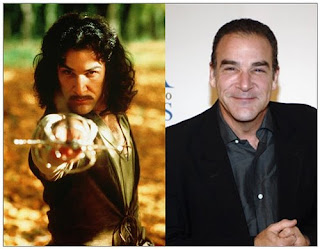
Radiation is not so bad, just grueling. The room is too cold for the patient, who must lie still while others move around. The arm brace stretches my shoulder a bit, so that I have to follow the therapy with Advil. And you have to sit around waiting, waiting. Usually I forget to bring the newspaper (or I remember to bring it but leave it in the car), so I end up having to read some inspirational cancer rag: Mandy Patinkin says cancer is the best thing that ever happened to him. My name is Inigo Montoya. You killed my father. The grief made me an idiot.


So, no, cancer is not an occasion for joy. I want to be stuck in a time-warp before I was ever diagnosed.

Years ago, my husband talked me into reading some of his favorite poems. This has ruined me. Now, a bunch of Great Writers have preempted all my thoughts on my own experiences. Whenever I try to formulate what an atheist, particularly this atheist, might see as the upside to a recent diagnosis of breast cancer (low grade!), I find myself giving up. Because Matthew Arnold, writing in 1860, has already said it all:

Ah, Love, let us be true to one another! for the world which seems
To lie before us like a land of dreams
So various, so beautiful, so new
Hath really neither joy, nor love, nor light,
Nor certitude, nor peace, nor help for pain;
And we are here as on a darkling plain
Swept with confused alarms of struggle and flight,
Where ignorant armies clash by night.

My daughter finds something depressing in those words, but I find such a solid measure of joy in that first line, it sustains me for the rest of the poem: "Ah, Love, let us be true to one another!" That's all there is. The universe is just one damned thing after another. If you are dealt a terrible hand, the deuce of clubs and the four of spades and some trash to go with it, it means nothing. NOTHING. But we can still be true to each other (exclamation point). The message really isn't so different from that you can hear in the more mystical practices within many religions, particularly, Christianity. In other words, God is, well, God. Try not to take it personally.

And when you have no luck at all, when you find out about the cancer inside or the loss of a loved one, it doesn't mean that those fortunate others, the ones who look on you and count their lucky stars, are more beloved by the universe. And, really, it could have been worse. Think of all the young people who died in crashes and wars while still not out of their twenties. I could have died screaming like my great grandmother, because evolution cursed her with a 10 pound fetus when her hips were only so big. Or like my great great grandfather who died in his youth, fishing off Nantucket, trying to feed his family. Cancer at 53? The universe does not even blink. But I am still here to ponder the one, the only commandment: "Ah, love, let us be true to one another!"

And at least the world offers a little more "help for pain" than when Matthew Arnold was alive. Now where is that Advil?

Friday, January 23, 2009

Safe as Houses

This house is not presently for sale, on Long Island, or anywhere else:


But it's a fine example of the sort of thing I'm looking for. Or wish I was earnestly looking for.

Let me back up.

Last November/December, The Fates decided to hand me a lemon with the whole breast cancer thing. Then, someone must have told the Fates that I'd soon be looking to sell my house in Austin and to buy something on Long Island. Intrigued, the gods wondered if there was any way they could add to my miseries. Clearly, they could. They sent along a couple, new arrivals to Austin, who begged my realtor to show them anything, anything in Rosedale that had four bedrooms. My agent didn't pressure us at all to show them our house, which we hadn't prepped for re-sale and certainly hadn't listed yet, it not even being Christmas. But I ignored my inner voice and let the couple come around to see the place. Five times. For several hours on the last visit. Mike joked that this very enthusiastic couple was enjoying his house more than he was. I, patting myself on the back, thought we had some serious lookers here. Being spared all the effort it takes to get a house ready to sell would be some tiny compensation for what I'd been through. I sighed with relief. I could enjoy my last months in Austin riding my bike whenever I could. And I was looking forward to picking out a new family home on Long Island.

When the couple finally made an offer, it was for almost 200K less than the asking price. We politely refused that offer and the next one, a mere 100K less than we were asking for. Finally, the buyers met our bottom line price. They signed a contract and forked over the laughable option fee. As it turns out, they were just wasting another week of the valuable real-estate season. When it finally came time to cough up real money for an inspection, they pulled out of the deal, claiming that something had suddenly come up. But in a classic example of a Freudian slip, the couple revealed that they hoped to get the house for their original price, later in the season.

So now I'm back at the Wee Cottage in Huntington, tooling around with a realtor on Long Island's North Shore, looking at houses with no real relish. Who knows what will still be on the market once we've finally spruced our house up and sold it (not to the aforementioned Fiends from Hell.)? Best not to fall in love with anything. But by not falling in love, I can at least enjoy being an anthropologist, observing the natives in their habitat.

And let me tell you, the natives are inordinately fond of crosses. Being the result of a typically Protestant upbringing, I've always been slightly embarrassed by the sight of a crucifix over the bed that husband and wife occupy. What is that little bit of symbolism about exactly? There you are, walking into a couple's master suite, not thinking about what must sometimes go on in there, and one of those things stares down at you and you're suddenly wondering why they have to put it there. What are they trying to remind themselves of? It seems to be saying, "Don't over-enjoy, darling, this too shall pass." The first house we visited, instead of having some delicately formed little cross above the marriage bed, had a hulking, yes, lurid, example of the form. Christ Twisted in Agony. I all but blushed.

The next house had crosses in every room, some with the body upon them and some without. What, are the home-owners worried about wandering into the kitchen to get some mustard and suddenly forgetting what their most profound beliefs are? I don't get it.

Anyway, in one of these houses, the owner was fond of crosses and dogs. The agent was anxious that the dogs, small but vicious little ankle-biters, would be loose. Fortunately, the dogs were locked up, but there was an oil portrait of them in the main hall. I mean, a nice oil portrait. Two yorkies and a chihuahua, in muted, earthy tones, were hung next to Jesus.

But one thing I can really appreciate is the abundance of in-home bars. A 'bar' is some piece of furniture or cabinetry, at which there is elevated seating and some clear indication that more than just coke is served. I've always felt that a shelf in the kitchen is adequate for the storage of the gin we occasionally enjoy, the wine we buy as needed, and the armagnac we get every Christmas, but clearly I wasn't thinking big enough. Most houses we visited at least had a wine rack in the kitchen or a wine refrigerator or both. Fully half of them had a bar in the family room or in the basement. One house had two bars in the family room, one in one corner, and one in the opposite corner. "One for wine and one for beer?" I thought. You could seat about four people at each bar.

God, dogs, and drink. Long Island may be without mysterious crewes and voodoo cults. It may not have a Willie Nelson or any flying saucer devotees. It may not have irritating Whole Foods fans who drink liquidized weeds for breakfast. It may not be, you know, weird, like Austin. But it's possibly weird enough.

Sunday, January 18, 2009

One-breasted Girls Go Wild

You know what worries me? I'm worried that when I'm finally sloughing off this mortal coil, I won't be pondering life's profound mysteries. Oh, no. Instead, I'll be dwelling on really silly questions. Like, "Just how many calories are there in a potato chip?" or "I wonder why Cuba Gooding Jr. didn't make more movies?"

When I was told I would have to have surgery, a few days before Christmas, I let many gloomy thoughts about mortality surface. I suddenly cared about how my family would remember me. My memories of my dad, Pat, are mostly wonderful, but for a long time after his passing from a terrible, debilitating dementia, I couldn't focus on the man I'd known. Images of the withered alien who'd reshaped his body haunted my every thought about him. I didn't want my family remembering my maimed flesh. I banned husband and daughter from the sight of my wounded self, vowing not to unveil my body until after reconstruction, still some months away.

But, hey, I should have saved the gloomy thoughts for later! As it turns out, the pathology finally limped back in from the Mayo clinic: four tumors, two less than a centimeter in size, two more than a centimeter. The second to largest tumor was at the edge of the tissue that the surgeon could remove, leaving a scant millimeter of 'clean' tissue around that particular tumor. Radiation was inevitable. The only good news was that the Mayo clinic confirmed that the lymph nodes were clear, so there was no dispute about the staging of the disease. My wonderful breast surgeon, Dr. Brown, refused to commit himself on whether or not chemo would be part of the treatment. "Ten years ago," he advised, "No one would have treated a Stage One carcinoma with chemotherapy. But that's changed."

Well, I thought, at least my mother will shut up about how they cut my boob off just to cure a case of blocked milk ducts.

The thing I feared most, other than just hearing my name and "cancer" in the same sentence, was having to go through chemotherapy. To steal a line from Molly Ivins, it seemed awfully unfair that they had cut me, were planning to burn me, and were thinking about poisoning me, too. I don't approve of wallowing, but when I got the path report back, a good wallow seemed long overdue. Dr. Brown said to stay positive, but I can't say I much felt like it.

When I want to succumb to utter despair for a few hours, I find the internet very useful. You can't graze the blogs of breast cancer patients for very long before you come across a blog that is no longer active because the patient, usually a beautiful young woman under 40, has died, after months or years of grueling treatment. Pardon my French, but I hate this shitty disease. I came away from blog-grazing feeling lucky again, or somewhat lucky anyway.

After getting the pathology back, my breast surgeon scheduled me for a visit first to the oncologist and then to the radiation-oncologist. The oncologist I was being referred to, as far as I could tell from all my googling, was the closest thing Austin had to a breast cancer specialist in oncology. Her MD Anderson fellowship was in bioimmunotherapy (whatever the hell that is), but at least she had a fellowship from one of the major cancer centers in the US. I could find no oncologist in Austin who was a fellow of any well-known cancer center. Anyway, Dr. K's credentials did impress me. Despite the hemming and hawing over whether I had cancer at all initially, I came to realize that, at the end of the day, my cancer is pretty routine and pretty curable. With radiation, I would have a 95% chance of non-recurrence. And being healthy over all, I had no special considerations that might require an especially gifted clinician. So it seemed at least advisable to meet with Dr. K and see what she was like.

As it turned out, people-feel is not Dr. K's greatest asset. But, then, that's not what I go looking for in a doctor. Better to have the smart one than the friendly one. Dr. K. went to some lengths to get a clear picture of the time-table of my disease, who I'd seen, and what they had said. Then she went through the path report with me at some length. As she spoke, it was obvious that she had a decision table in her head about my treatment. She apologized profusely when she found that a key addendum was missing from the report. Without information regarding a key receptor in my tumors she could not rule chemotherapy in or out. She didn't seem to appreciate how anxious I was for this piece of information, though she did start making phone calls, to find out where the mystery information had gone or even if the pathologists had run all the tests they were supposed to run.

"If you do have to have chemo," she said, a trifle blithely I thought, "You'll lose your hair and you'll have to have a port installed in your chest, but you would not be prone to nausea and vomitting." Clearly, when you've had patients die from this killer, you have a peculiar definition of "the bright side".

Then came the news that she wouldn't be seeing me for two weeks. Two more weeks to find out if I would have chemo or not. I left the hospital near to tears. If she did declare chemo a necessity, I would get a second opinion, though from whom I wasn't sure. How's that for a scientific approach? I will challenge all the doctors who tell me what I don't want to here and sweetly agree with all the ones who tell me what I do want to hear. I called her the next day, to see if the report had turned up, but she never returned my call, possibly because the nature of my message, which of course had to go through Dr. K's nurse, was not conveyed.

Two days later, I went to the radiation-oncologist for a consultation. His nurse went through the pre-consult drill, going over the pathology again. I asked her if the addendum regarding certain receptors in my tumors had come back. Of course, nurses aren't really paid to break bad news and she would have been well within her rights to ask me to wait for the doctor. But she very kindly studied the addendum and said, "Woo-hoo, no chemo!" I felt the air rush back into my lungs. As my grandmother would have said, I felt like the extra chicken who the kids have picked to be the family pet.

By the way, do you know how to tell a good nurse from a great nurse? A good nurse weighs you and writes the numbers down as she sees them, not listening to all your yapping about how much your shoes weigh, how much your wedding ring weighs. A great nurse takes your own assessment into account and writes down the adjusted number you give her. I've had one great nurse in the past week and one good one.

Anyway, the radiation-oncologist (another Dr. Brown!) came in and turned out to have a lot more people-feel than Dr. K. I bonded with him instantly, especially when he whipped out his Iphone to check his dates. He would clearly allow himself to be drawn in on discussion of his apps vs. my apps, but I decided to play it cool. At least for this first visit. Plus, and I guess this says something about the nature of a radiation-therapist's work, he gave me his cell-phone number and said to call him personally with any questions I had. I've never had a doctor do that and I expect this to be the last time I get such an offer from any doctor.

So, now, I'm officially on the Cancer Train. There'll be years of appointments and nerve-wracking tests. There'll be tamoxifen and the arrival of menopause-like symptoms that I, even at 53, have seldom experienced. I've warned my husband that I may go crazy. But, though the news is worse than I was ever willing to contemplate, I'm no longer scared.

I realized just how not scared I was when I came back from a bike-ride with Mike. I'd dragged his butt up a few hills and he'd survived it well. We were having a lovely post-ride talk about nothing in particular. I had no desire to end our chat just because it was time to hit the shower.

I mean, this is The Shower. The place with a beautiful echo and two shower heads. The sea-foam tile is lovely, which means we couldn't afford it when we ordered it some seven years ago. We call it the Bob Dylan tile because, when we tried to rescind the order for the tile (Mike the Math Boy had never troubled himself to work out just how much these beauties were going to cost), the tile company sent us a list of all the stars and celebs who'd bought the very same tile. Bobby was on it. Joni Mitchell was on it. We would have canceled the order anyway, but the tile company refused.

So, anyway, we're in the bathroom, staring at The Shower. It was time to break up our chat so I could keep my body unseen until reconstruction. But whatever thoughts I had about mortality suddenly didn't seem worth the sacrifice of time I could be spending with a loved one. I decided it was time to forget about dying. It was time to stop insulting my husband's humanity. Just as he trusts me to love an imperfect body, I trust him to do the same. It was time for a good wash with a great guy.

Monday, January 5, 2009

Don't Parton Me


"Lures slung around her neck," wrote Germaine Greer of the human mammary gland. Anthropologist Marvin Harris wrote more or less the same thing, speculating that the human female has larger breasts than other primates because human males, preoccupied with cave paintings and interesting piles of dung, won't man up for just any ordinary pair. Big boobs are the two-by-fours of human reproduction.

Or not. I really have no opinion on how the human breast got to be so large. I just know that for many of us, the size is over and above the demands of mere lactation and pleasurable sensation.

I knew that at the start of this breast cancer journey,that I would probably have one, maybe two revelations that would come as a complete surprise. The nature of my revelation begins some six years ago, after my return from a spectacular vacation in England and Wales. On the first day back, I made the as-it-turns-out helpful mistake of stepping on the scales. The dial whizzed up to an astonishing 177lbs. On that 21-day holiday, there had been much feasting, many steak-and-kidney pies consumed with many pints of bitter. Get me going and I can strap on five imperial pints of Wadworth's 6X before the night is out.

So, not too surprisingly, I'd gained a pound every three days while on that marvelous trip. This new peak in weight was the crowning moment of a long march towards obesity that had begun when I'd returned to work after the birth of my daughter some seven years before. Stressed and unable to exercise, I'd packed on pound after unhappy pound. Jeans got too tight and then were discarded entirely in favor of nice, roomy chinos. To this day, I keep one dress from this period, The Tarp, as a chastening reminder of the whole process, a process that often had me looking in the mirror, and wondering where I went. I recognized the face, but nothing else seemed to belong to me.

But thanks to a kind spouse and a benevolent employer I returned from England, ready to go part-time. Seeing those unfamiliar numbers on the scales, I shelved plans to paint the house in my spare time and decided instead to get into shape again. I'd been a runner in my twenties and thirties. Where had that girl gone? As it turns out, I'm not cursed with a particularly fat-prone metabolism. All I needed was time on the bike. Within a few months, I'd shed the first 30 of the 47 pounds I needed to lose.

But nature is cruel. I lost weight from my face, my hands, my ankles, my fingers (I still wonder exactly where that first wedding ring slipped off, never to be found again). I even lost weight in a few places that clearly needed it, from a bum that, as David Sedaris' father would have said, was large enough to land a chopper on. But things weren't so happy in the upper hemisphere. True, I wouldn't have to buy my bras at Wal-Mart anymore, but neither did I dare attempt naked jumping jacks, lest I break my jaw. My knees were getting a break and were very thankful for it, but my upper spine, already curved from scoliosis, wasn't happy at all.

It never occurred to me that there were any options in dealing with the largely undiminished boob fat. I figured if I ever lost that last 17 pounds, my boobs would become something my spine was built for. Why I would have thought this is unclear, because I'd been buxom if not downright Partonesque ever since my teens. But, determined, I trained very hard for the Livestrong bike ride one year. I lost another ten pounds and was intrigued to note, again, how little came off the chest area. Just cursed, I thought. The very idea of a surgical reduction struck me as the sort of bourgeois self-indulgence that would get me hung when the revolution came. I didn't even consider it.

And now we return to that revelation that came with being diagnosed with breast cancer, be it stage zero or one. When I realized that I would have to undergo a mastectomy, I consoled myself with thoughts of a return to a perky pair. I didn't ever consider that I might just feel better with some of the weight gone. Even with the differential weight on one side, I feel stronger, less jiggly and ridiculous. At least on one side! Sure, I hate the scar. I hate the loss of nerve endings and I loathe the unnatural numbness that I suspect will always be there. I would never trade the healthy skin and nerve endings in the good boob for the lifeless concavity on the other side.

But in losing that one vat of jelly, I now glimpse, in those few hours of the day when I don't have The Blob stuffed in my bra, what it would be like to be normally proportioned. If you don't believe how much I'm looking forward to a further reduction, walk around with a five pound weight for a whole day, then walk around for an hour without it. You'll never go back.

If I could talk to that 49-year-old woman who'd recently done herself proud in the Livestrong ride, who was almost at her ideal weight but who still had to carry those swaying jugs around, I'd shout at her: "Get a reduction! Nature has done you no favors!" Big boobs may have been good for the species eons ago, but since the future of the species seems assured, perhaps now we could worry about what a bother these pockets of excessive flab really are.

(Though, thinking back on it, having a reduction just as I turned 50 may not have worked out. For my 50th birthday, my husband took us on another trip to England. I gained ten pounds in two weeks.)

I'm still awaiting pathology. I still don't know if radiation is in my future, or even worse, tho this seems unlikely. But I do know that more fat is coming off, with the help of a diet and a knife. I'll worry about the revolution later.

Which will arrive at about the same time I get around to painting the house.

Wednesday, December 24, 2008

War Scars

They probably haven't covered this on the Food Network yet, but I can personally testify to the fact that the well-endowed female chef has a significant advantage over her flat-chested colleagues, female or otherwise. For instance, there are times in the kitchen when you have to have a room-temperature egg right now. On Christmas Eve '08, I was in just this predicament. It's not Christmas without home-made dinner rolls, the softish, sweetish kind that Americans are so fond of. But I was running late and I really had to have that warmed egg, so I tucked it under a boob. Cocooned, the egg warmed up quite nicely, in about 3 minutes. Thus the bread was baked in time for dinner. So, as you can see, boobs are useful things in the kitchen.

But you can make do with just one.

***

It was mid-October and I was at my ob-gyn's for my annual visit. We were having a good moan over the economy and were panic-struck that Caribou Barbie might actually swing the election away from the guy we both wanted (it's always nice when the doctor who has seen more of you than your own mother shares your political views). My doctor observed again what she had observed a year before, a thickening in my upper left breast. Not a lump. Not a mass. Just a thickening.

"Look," she said, "I know we added an ultrasound last year, and I'll concede that your mammo still looks perfectly ordinary, but I'd just feel so much more comfortable if our breast surgeon takes a look. If he agrees it's nothing, I'll quit worrying."

I yawned. I love my ob-gyn, but she's the panicky sort. However, I do take these matters seriously. Nearly thirteen years ago, when I turned 40 and had a new baby on my hip, I resolved to do better where my health was concerned. I started flossing every day. I booked my first mammogram. My mother assured me this was crazy. Since breast cancer didn't run in our family, what was the point of getting your boobs crushed in that infernal machine? Like many people, she clings to the notion that some individuals are just marked for cancer. And since she's not marked for it, I can't be marked for it. The discovery of leukemia in the bones of her beloved first grandchild, some twenty years ago, did nothing to change my mother's opinion that patients should diagnose themselves and not listen to anyone with a medical degree.

Being a master at ignoring my mother, I've had my boobs crushed faithfully and largely on schedule, every year. By the time I was 45, the radiologist started seeing little grains of calcium in one breast. Tests were scheduled. Observations were made. I panicked. Nothing ever came of all the scrutiny. So when Dr. Ortique had me schedule the visit to the boob doc, I thought I was humoring her. Again. Just like last year. To me, what my ob-gyn was feeling was just the same old gnarly, fibrous matter she'd been feeling for years.

The hospital's new breast surgeon turned out to be a terrifically nice guy from New Orleans. Dr. Brown wasn't worried by what he felt as he palpated the suspicious area. The tissue certainly didn't fit the disturbing pattern of a roundish but irregular mass. "But let's do another ultrasound," he said. "Just to be sure."

More yawning. More irritation. By now, Thanksgiving is closing in and I really do not have time for this. But dutifully I go to the radiologist for the ultrasound. Anyone who has contact with the medical community knows that radiologists are the odd birds of the medical world. They spend hours a day in a cave, mumbling into recording devices and looking at images of various kinds. People skills aren't a big thing for them, not usually. So when the radiologist planted the ultrasound wand on the same area she had examined a year before, I wasn't sure how to react to her announcement: "What I see is very troubling." She succeeded in making me anxious, though. Of course, she wouldn't be able to do a biopsy for several days, owing to her three-day work week. I'd have the weekend and then some to stew on things.

My husband was away in New York. I didn't want to panic him, so I called up my sister and did my best to worry her, too, though as a former hospice chaplain and the mother of a cancer survivor, she's a professional when it comes to avoiding panic. She kept me sane, a bit, but I worked hard to bring her into the pit with me. I reminded April that the majority of breast cancer patients have no family history of the disease. She countered that, for a radiologist, a good day is one where she does find something and when she can't actually find anything, she'll make do with feeding a patient's doubts and fears. After talking to April, I breathed a sigh of relief, hung up the phone, and went back to my normal routine of bike rides, house cleaning, and the care and feeding of a thirteen-year-old. And I waited for the pages to turn on the calendar.

***

The assistant covered me in goo, waved her wand, took her pictures, and called the radiologist in. The assistant and the radiologist seemed to have an excellent rapport, but damned if I could figure out why it took two of them to study my case. The radiologist just seemed to repeat the technician's actions. My old programmer's eye couldn't stop looking for opportunities to streamline someone else's business. But this useless fog of thought was quickly banished by the radiologist's next words, spoken in her soft Irish accent: "It's cancer we're looking at."

My first question was: Why did my mammograms, which she had been reviewing for some six years now, show nothing? The radiologist declared that this was probably a case of invasive lobular carcinoma. This kind of cancer, which characterizes about ten percent of all breast cancers, can go undetected for a long time. She took three biopsies and immediately made an appointment with the breast surgeon. That's how convinced she was that there was a problem. The appointment would be for the next day, at 2.30. She said she'd probably have the pathologist's report back in the morning.

I didn't totally panic. I knew that until the pathologist analyzed the tissue samples, nobody knew anything. I didn't want to frighten Mike, so I kept my own counsel. I worked in the yard and started a diet right then. At the very least, I reasoned, we'd be looking at surgery of some kind. And I believe in preparing for surgey the way you prepare for a marathon. I knew I'd do so much better if I went in as fit as I could be.

Morning of the next day came and I waited by the phone, my panic growing. "It's bad news," I thought to myself. If it were good news, she'd call. By the time I was back at the hospital and in the surgeon's waiting room, I was convinced that the news would be awful. Dr. Brown came in and announced quickly, "It's not cancer. In some ways, it's worse."

And thus began my immersion in the nebulous world of cancer terminology. Dr. Brown explained that the biopsies showed Ductal Carcinoma In Situ (DCIS). In other words, the cancer had not yet invaded any surrounding tissue. This was good news! I kicked myself for reading so much into the fact that no one had called me that morning. I kicked myself for being sucked into the radiologist's sweeping diagnosis of my condition. I was so busy kicking myself that I completely misunderstood Dr. Brown's "In some ways, it's worse." I talked myself into believing that he meant worse in some obscurely technical way, one beyond the concern of mere mortals who'd just been told they didn't have cancer. He cautioned me that now I would have an MRI, and that this was likely to lead to more biopsies, possibly unnecessary ones, because the noise-to-signal ratio of an MRI is so much higher than with ultrasound. I rushed home and read everything I could on the internet about DCIS, my heart feather-light now that I didn't have cancer. I cursed the radiologist for being soooo wrong.

***

And I would come to curse the internet, too. There are people like my surgeon, who only use the word 'cancer' for invasive carcinomas. And there are other people who insist that DCIS should indeed be called "cancer", but cancer at stage zero. Busy as a buzzard on roadkill, I tried mightily to ignore anything I didn't want to hear and paid too much attention to all the benign descriptions of DCIS. DCIS could become cancer, or at least reside right alongside it. I read the testimonies of women who had 'multi-focal' instances of DCIS in the same breast and hence had to have the entire breast removed. Some of these women were informed that small invasive tumors had been masked by the DCIS. I was quite able to read all this and believe that at the very worst, I would have a lumpectomy. I could not possibly be one of those ladies who would have to undergo a mastectomy. Or chemotherapy.

Occasionally, a light-bulb would go off and I would think of Mother and her near-mystical belief that some people just aren't marked for cancer. Despite all my research, I was guilty of the same magical thinking. On the basis of biopsies, which are essentially small samplings of a fraction of the diseased tissue, I had come to conclusions that my surgeon had never encouraged. He had laid out best and worst cases, but all I could hear was his terminology: It's not cancer. Therefore I'd at worst have a tiny scar.

After that first visit to the breast surgeon, I went for an MRI. The results from the MRI suggested that biopsies in the right breast were warranted. This job was assigned to the ultrasound radiologist, who basically balked, unconvinced that the MRI radiologist had spotted anything at all. She referred me again to the MRI radiologist, because the one area she agreed might be worth a biopsy would require her to completely penetrate the breast from one side to the other, and her office wasn't set up for such a procedure. Another delay! And of course the MRI radiologist would have an annual week-long booze-up and conference to attend before he could get back to me. Another ten days passed as I waited for a biopsy with an MRI-assist. And more days passed, waiting for the pathology.

But I wasn't really concerned. I was already hearing my surgeon's voice: "Right breast is normal. Left breast has this tiny problem. See you after Christmas". Yes, this had all taken so long that Thanksgiving had come and gone and Christmas was bearing down like the Polar Express.

***

When Dr. Brown walks in and says, "Good news! There's no sign of disease in the right breast." I want to get up right there and go back to the Irish radiologist and say "Nyah, nyah, nyah!" to her smart-ass conclusions.

As Dr. Brown continues talking, it's clear that the tidy little lump I've imagined in my left breast doesn't fit that description at all. He has me get up on the table again and again he palpates the suspicious area. "What I'm feeling is what I'm also seeing on the MRI," he says. The lesion isn't lumpish at all. It's a diffuse, fern-like object, a corruption of the milk ducts in nearly 50% of the breast, or more. With a classic lump, you remove it, plus a centimeter of surrounding healthy tissue. But at this microscopic level, it's not clear where the healthy margin really starts. And having half a breast is worse than no breast at all.

Slowly, I realize what he's talking about. Now I understood what he meant when he said, a month before, that DCIS was in some ways worse than cancer. A tidy, stage 1 lump, treated with lumpectomy and radiation has a very high cure rate. But such a large, diffuse carcinoma would have had so many more opportunities to become invasive. And you can't just flick it out with a nail-file. At the very least, Dr. Brown was advising a mastectomy. And the final pathology, if it uncovered cancer in the lymph nodes or tiny invasions into the fat near the milk ducts, might well indicate chemotherapy as well.

Wow. For Dr. Brown, "good news" is clearly a relative concept.

I repeat back everything he says to me, to make sure I understand what's at stake. Unlike many surgeons, Dr. Brown has fine people skills. Instead of making me feel dumb for repeating his information (not that I'd ever fire a doctor just because he made me feel dumb--that would be truly stupid), he says that he does the same thing when people are briefing him. He gently advises that I take time to think about all that he has said. He did not try to hurry me at all and he gave me the feeling he'd sit with me for as long as it took.

I leave his office, my thoughts blurry with fear and despair. I still have to pick Mike up at the airport. He'll be wanting to hear what Dr. Brown said the second he sees me. I think up a statement that is the truth but not the whole truth. I practice the statement while driving in the car.

***

When I picked Mike up, I recited my line: "I'll have to have surgery, but there's no disease in the right breast and no reason to revise the original diagnosis of DCIS." He's all but skipping to get back to the car. Once in the car, I burst into tears and tell him that the surgery we're talking about is a mastectomy. I can't bring myself to tell him the other troubling bit of information, that one of the lymph nodes in my armpit is swollen. The swelling could be just from the biopsies, or it could be the first sign of an already invasive cancer. Nothing will be known until the sentinel lymph nodes and the diseased breast is removed and can be examined fiber by fiber. Mike hugs me and shows no signs of sharing my fear, for which I'll always be grateful. I make arrangements with dear friends to have Jesse out for the evening, so that Mike and I can go have a meal and spend some time together.

The next day, I research what other DCIS patients have to say on the issue of mastectomy. I can't find anyone who has been diagnosed with "multi-focal DCIS" and who is refusing what appears to be the always-recommended treatment of mastectomy. One woman with this type of DCIS says she saw three breast surgeons and all recommended the same treatment. In one of my dumber moments, I wonder why I shouldn't just demand that they do biopsies until they find some evidence of invasive cancer. But isn't the whole point of a mastectomy, in this type of case, to remove tissue before it becomes invasive?

The question finally comes down to one of quantity, of how much tissue it's feasible to remove. If I'd wanted a second opinion on anyone's analysis, it would have been wise, perhaps, to seek out another pathologist. Maybe it's not a carcinoma. Maybe it's just blocked milk-ducts as my mother kept insisting. But I remembered what Dr. Brown had said in that awful and quite long conversation, that because the DCIS had been in my boob for so long without throwing off any of the tell-tale micro-calcifications that radiologists look for (I had some, but in the other, disease-free boob), my case was already being presented to the hospital's tumor board and was already getting a high degree of scrutiny.

And I'd had other surgeries at this hospital and had always been impressed both by the professionalism of the staff and the abundant and effective use of automated record-keeping. My level of trust was very high with this hospital generally and at the end of the day, I'm no more competent to pick one pathologist over another than I'm competent to design a rocket. I'd read enough about breast cancer to know that I would certainly insist on an oncologist who was either a recent associate or a current fellow of one of the major cancer research oganizations -- MD Anderson, Sloan-Kettering, the Mayo Clinic -- but as regards this stage of the disease, the treatment seemed fairly uncontroversial: lumpectomy followed by radiation, and if the disease is multi-focal, all disease-prone tissue should be removed, possibly avoiding the need for radiation at all. Most breast surgeons, I came to conclude, would recommend this treatment.

Twenty-four hours after being informed of my grim choices, I was already bent on getting better, on getting past this ordeal. I talked to one of my oldest friends, Paula, a sharp and very research-oriented nurse by training. We talked about treatment options, about what clothes I should pack, what precautions to take. Such conversations were vital in helping me wrap my mind around the relative safety of what I was planning. Talking to Paula reminded me of how it sometimes feels when I step on a plane. I'm nervous and a little sweaty in the palms, but the sight of the flight attendants briskly moving through their routine reminds me that what I'm about to do is not so extraordinary. Painful, yes. Horrifying on some level, too. But I've seen what it is to lose a child and to have one threatened by disease. Mastectomy doesn't even come close to the terror I'd feel if my daughter's doctor ever so much as mouthed the words: "Let's run some blood work. Just to be sure."

In extreme optimism, I even fasted on Sunday night, hoping the surgery could be organized on Monday. My breast surgeon had said that Monday could be possible. But, you know surgeons. They generally have to share operating theaters with other docs who have their own priorities. Dr. Brown's opinion of what was possible was not the same as the hospital staff's. I hung by the phone, waiting to get a time for my operation, and eventually was told that the surgery was scheduled for Thursday afternoon. I rang my sister, who informed me that her hysterectomy was scheduled for the same hour! Fortunately, we weren't going to be in the same hospital.

It made me think how problematic these lady parts can be. Like most professional women of my generation, it find it offensive to suggest that females shouldn't have combat roles in the military. But I also realize, particularly now, that just being female is soldiery enough for many of us. The estrogen that made it possible for me to do my bit in pulling the species up to the next rung in the evolutionary ladder is also over-binding with other cells and making them go haywire. The scars will be permanent. The task is possibly no less noble than whacking the enemy when he tries to step on your shores. The benefits are just longer term than your average military victory.

***

Thursday arrives and Mike drives me to the hospital. You can have no better partner in life or in a foxhole than my spouse. His manner is perfect. He's not stupidly blithe or overly anxious or hang-dog guilty. He's collected and proactive. And this from a man who lost his own mother to breast cancer! I know that his guts are knotting up, too, on some level, but he's not giving in to it.

We waited in the prep-room while the nurse filled out paper-work and started me on saline. He asked me what meds I'd had in the last 24 hours and I guiltily reply that I'd taken half a miligram of Xanax the night before. "Don't apologize," he says. "I would have taken a whole one." We all laugh. Better living through pharmaceuticals.

I put my iPhone's earbuds in and listened to some David Sedaris readings. As they wheel me in for more fancy radiography (to help the surgeon locate the sentinel lymph nodes he intends to remove, prior to the main surgery), I am laughing a lot. The medical staff look alarmed, but I couldn't help myself. Sedaris' stories of his crazy Greek American parents are too much. When they lower the machines around me, I start to really howl with laughter (Sedaris had moved on to explaining why he serves the Great Jewish Conspiracy at NPR). The startled technician, certain that I was having a claustrophobic fit, hauled me back out. I turned the iPhone off, out of concern for the staff.

***

More waiting. The dyes they've injected me with are slow to diffuse. The technician asks me to "manually manipulate your left breast with your right hand." What, you want me to do it? That's not part of the service? Who do these people think they are?

As instructed, I jiggle the mass of flesh and try, instead of saying goodbye to it, to focus on how much worse it would be to lose the use of a hand, or a leg, or an eye. This is one of the bodily objects you can stand to lose, I remind myself. And besides, after an upgrade on the other boob, I'll be able to wear spaghetti straps again. If I get out of this without having chemo, I'll be dancing, but not bouncing, and that's a good thing.

More waiting. I'm wheeled back into pre-op but the word is that the prior surgery went on much longer than expected. That's okay, because in the gap the phone rings. It's my daughter, my dear thirteen year old, calling up to say she loved me, something she did completely unprompted. She'd even remembered to take her cell phone to school, a rarity, just so she could make the call. How did I do so good? To have such a child? I have no inclinations towards magical thinking, but every parent, even embittered non-theists like me, must sometimes feel that there is some Universal Heart/Mind that has obviously spent eons thinking up exactly which fetus would be the right one for you. Nothing I could have consciously done could have made something so wonderful as Jesse appear.

The anaesthiologist comes in and says that Dr. Brown wants to get the surgery underway before the radioactivity in my nodes subsides, thus making them harder to locate. Dr. Brown comes in, meets Mike for the first time. I've told Mike to really listen to how people from New Orleans pronounce "aureole". It's truly bizarre! Like "Areeler". Dr. Brown, when he explains to Mike what the surgery involves, does hazard upon the quirky pronunciation, but Mike is too concerned to notice. I want to tap him on the hand, to alert him, but what would I say? Why do I find this so fascinating? I'm trying not to smile. Dr. Brown must think I've had more Xanax than I admitted to.

An hour more and someone arrives to hang a bag of happy juice on my IV pole. It is time. I get that triple-tequila feeling, and vaguely note that one of the op nurses is older than I am. Things go black for awhile.

***

I'm not awake but for a minute when Dr. Brown appears at my side. I don't think he's much of a poker player. He seems visibly relieved. The nodes seemed entirely ordinary, not enlarged. I'll learn later from Mike that Dr. Brown went so far as to say that he thought it wasn't cancer, a sweepingness of statement that I'd never heard from him. But I know until the pathology comes back, we don't have very much. The lab trumps everything. Dr. Brown marvels, not for the first time, at how fit I am. I take his hand. I'm wondering just how unfit his average patient is. I mean, sure, I biked 50 miles in Blanco county recently (those hills are nasty), but I was surrounded by many who pedalled faster. It's all relative.

***

I'm old enough to know that the post-op is the killer. I'm in a cold room, with two drains that look like hand-grenades dangling from my chest. I marvel that I can see my rib cage without the benefit of a mirror. How queer. It's 7 pm or so and I've been twenty four hours without food but I'm not hungry. Mike brings Jesse to see me and she gives me as much hugging as is possible given my fragile state. I am happy again. She leaves and the long night just keeps coming. I never really fall asleep. Just watch episodes of "The Closer" that I've downloaded on my Iphone. Nothing really hurts that much, but if I could sleep, I'd accept a little pain in return.

***

Next morning, I think: let the recovery begin. I realize that the mobility in my left arm is not that bad and I instantly wonder if I should ask about getting back on the bike. What if I don't like the answer? Better not to ask for advice and just do what I want. Dr. Brown arrives and says I can leave anytime, that he didn't normally approve of releasing a patient so quickly, but with my superb stats, there was simply no reason to keep me. Mike arrives and we wait to be released as soon as the nursing staff can get to us.

***

On Christmas Eve, six days after the surgery, we return to Dr. Brown's office to get the pathologist's report. He appears congenial and unhurried, and must surely know that we're almost uninterested in what he first occupies himself with, that is, studying the hand grenades attached to my chest, where all the fluid from the wound has been accumulating. His preoccupation with answering the question of whether or not the drains can come out today is, we both think, a sign that the news is bad.

"I have mixed news," he says, to the inner sound of my sinking heart. I remembered the last time we began with the "good news"; how much worse will it be beginning with the mixed news? But the good news, this time, is very good. There's no cancer in my lymph nodes. At worse, we're looking at a stage one diagnosis, very curable.

The next news is ambiguous, he admits. The pathologist is patiently going through the breast tissue, and is leaning towards a diagnosis of non-cancerous DCIS but wants to get a second pair of eyes involved. And it being Christmas Eve -- "The pathologists are all drunk and under bridges right now," Dr. Brown declares -- it could be several days or even weeks until we know more. I let go of the breath that I've been holding on to for the past two months. It could still be cancer. I could still have to undergo chemo, which I'm terrified of, but my prospects are pretty good. This isn't some weird, aggressive cancer that's going to shut me down in six months.

Dr. Brown calls that night, while we're rushing around preparing our annual Christmas Eve feast, that this year will begin with crab salad in a puff pastry. I tell Dr. Brown to get his own self home, which he promises to do, but he wanted to let me know that the tissue samples will take a while to process, because they've been sent off to the Mayo Clinic! I think the pathologist is having a hard time deciding exactly what she's looking at and wants to bring in other doctors who may have seen these exact types of cellular deformation before. There is doubt, but the doubt hovers between a stage zero and stage one diagnosis. He verifies that I've already made an appointment to see him, in a fortnight's time.

I ring off, stirring a sauce, thinking how much nicer the sauce would be if thickened by an egg. But I'll need it quickly. And warm.


Tuesday, August 26, 2008

Last of the Summer Whine


After Mike and I enjoyed our own Babette's Feast in NYC, there came a week of saying goodbye to Long Island. This was a daughter-free week in which I got to suit myself, supposedly, though some of my time was spent getting the Wee Cottage ready for hand-over to the sole occupant, Mike. He would be staying behind for a couple of months. It seemed unfair to stick him with a dirty refrigerator and the strewn personal effects of two disorderly women. Not that Mike isn't looking forward to at least visiting our home back in Texas. There, he has some form of male compansionship in one of our dogs. The shih-tzu is not much of an ally, or even much of a dog, but he is all male.

During that last week on Long Island, I made myself drive to the end of the "North Fork" in order to rent a bike and see the scenery. The tip of Long Island makes a wishbone and the southern part gives you the Hamptons and the northern part gives you wineries and sea-side neighborhoods and much less congestion. Tho, as far as I could tell, just a converted garage in the area goes for a half-million.

Driving the 60 or so miles from Huntington to the to the bike rental shop was perhaps too easy. My GPS, "Agatha" as we like to call her because of her British accent, masterfully steered me to Greenport, a very pleasant little seaside village a few miles past the Sea View hotel. I thought as I passed this long, low establishment, hugging a terriffic view of the sea, that it would provide the best spot for a late lunch by the water. "The Sea View" I muttered over and over again, to fix the name in my memory. I knew I'd be back.

But first, some cycling! The bike shop was in the heart of Greenport and the lady behind the counter was assisted by the largest, most gigantic Great Dane I have ever seen (you'd need a team of landscapers to deal with that big boy's poop). She showed me the bike and implied that any fool would take the ferry to Shelter Island rather than riding to the tip of the North Fork. "There's a lot less congestion on the island", she said. And any fool could find the ferry, she assured me. "Just keeping going until you see a fat sign that says 'ferry'. There's only one."

I had never heard of Shelter Island but if you look at a map, it's the big blotch of land in between the North Fork and the South Fork. About 15 kilometers square, surrounded on three sides by smallish waterways, you'd think the Big Fat Ferry in the Small Village would be easy to find. But, my sense of direction now throughly eviscerated by Agatha the GPS, I had to ride around a few streets before I stumbled on all the signs of ferryness: a conspiciously marked lane and something vaguely like a large ticket booth for a toll road. And there was the ferry! Don't panic! The Great Dane Woman had said that it was a half-hour round trip at most. I stood the bike against the booth and fumbled with the machine long enough to find it didn't work.

The small ferry was still waiting. With peeling white paint and decking, it was big enough for a half-dozen cars and a few passengers. I rolled my bike on, wandering what the penalty was for passengers without tokens. The bored fare collector didn't even want to hear my apology! He grunted, gave me a slip of paper, then moved on. The crossing really was barely fifteen minutes, with passengers either staring out at the brilliantly green island rising from the water or yakking into their cell-phones. Once again, I thought on how much I loved northern light; how much I don't miss the skull-crushing blankness of a Texas afternoon.

We docked and I rolled my rental off, then spent ten minutes futzing with a way to anchor my purse to the handlebars. With the purse strapped down within an inch of its life, I looked around me and discovered that the town on the Island side of the ferry route, was comprised of a few streets of pretty, 19th century houses, on modestly sized lots. This house, a little large for the area, was situated on the village green and was pretty typical of the architecture.

I started off, grateful that the bike, unlike the one I'd had in Central Park a few weeks ago, at least had gears. And brakes. I really like brakes on a bike. The town, Shelter Island Heights, had a community feel, which I fear was just a consequence of the dainty architecture and the fact that some do-gooding busy-bodies won't let the properly well-off come in and knock everything down for sprawling estates. Good on them. They've even put up a historical marker noting the founder of the first European settlement, a sugar merchant from Barbados. Wiki says he paid James I for the rights to settle the island, and confirmed the sale with local Indians. No doubt, the Indians would have preferred to be actually paid, but Wiki says nothing more on that subject.

Once out of the village, the traffic was indeed muted and there were plenty of bike lanes and plenty of cyclists around. Judging from the map, I determined it would be an easy matter to cross the town, then get out to a little side road that would afford a view of the sea. From there, I would make my way around to the Atlantic side of the island, where I hoped to see some actual waves. I discovered that I had an image in my head of riding for a good while with the sea on one side at all times and with the wind at my back. As it happened, I had to be content with seeing the backsides of houses that faced the sea. Very infrequently, I glimpsed something vaguely blue. I blame all the new, swaggeringly big architecture eclipsing view of the sea, and on Agatha's damage to my internal direction finder, for the fact that after riding several hours, I found myself pretty much back where I started. I cleared a ridge and saw the ferry making its way across the sound. And the bike was due back at the shop in an hour. No matter. It had been very green and very quiet. I'd just have to find another place for long, seaside rides.

Back on the mainland, I got into my car, determined now to drive the eight or so miles to the tip of the North Fork. I wouldn't gaze at the waves for awhile, then turn around, find the Sea View Hotel again, and have lunch there. That was the plan, anyway. I didn't turn on Agatha. How hard could it be? This is a long, very skinny island. You just keeping going in the direction you came in. If your tires get wet, you've gone too far.

As it turns out, I completely misunderstood the sun in the sky and drove for 45 minutes, thinking that surely my tires should be wet by any minute, only to finally get Agatha out and realize that I was in fact, almost back to the start of the Long Island Expressway. I was well off the North Fork and on to Long Island proper. I was so convinced of the correctness of my heading that when I saw another hotel, also called The Sea View, I determined that there had to be two Sea View hotels on the island. "How unimaginative," I thought. Certainly, it was beyond my imagining that I could have, again, gone the wrong direction in Yankeeland.

Clearly, I'm not safe to leave the house in any place but Texas.